

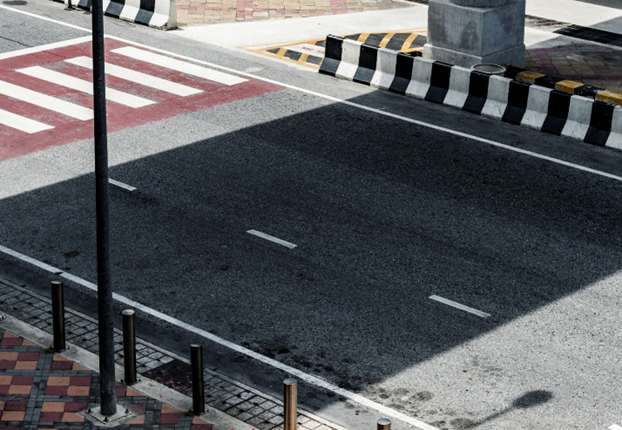
Curbs are present on every city street, but how many people actually think about them? In addition to outlining the edge of the pavement, curbs are important for protecting the pedestrian realm, managing traffic, and helping drainage for the street. For parents, residents, and students who walk, understanding the role of curbs brings meaning to the importance of good design and maintenance.
As we walk through school zones or busy intersections, curbs are often the simplest safety measure provided in contemporary road building. Having a system of curbs also helps the city manage the space and engage both drivers and walkers in shared space usage. To learn more, visit this site https://en.wikipedia.org/wiki/Curb.
Curbs as Barriers
The most important function that curbs provide is that they are a barrier to the pedestrian realm. They are a physical demarcation when there is an edge and discourage vehicles from drifting onto sidewalks or pedestrian areas. In denser areas, the curb can be the difference between a safe walkway or a dangerous one.
- Curbs prevent illegal parking on sidewalks, which permits the maximum amount of walking paths as possible.
- Curbs provide physical direction to vehicles if a driver loses focus or intends to cut the corner too tightly.
- In parking lots, curbs properly built help prevent cars from striking storefronts or pedestrian paths.
Paving contractors in Nashville have similar practices, designing curbs with not only functionality but increasing height or reinforcement in high traffic areas. This would ensure curbs can resist impacts from cars and long-term wear. In fact, some roadway designers consider curbs to be the best option as a first layer of protection for pedestrians along busy city corridor routes. Modern designs are even utilizing non-slip reflective paint or built-in drains for both visual and functional benefit.
Separation Between Traffic and Sidewalks
Curb separation of the traffic to the sidewalk is another factor. In urban design terms, separation is an order for safety from free-moving vehicles. This is needed for people traveling non-motorized who would not feel safe traveling close to free-moving vehicles.
While more frequently than not, this applies to parks, playgrounds, and shopping areas, many sealcoating projects and driveway construction projects emphasize the curb as a way for residents to travel safely without pavement.
When cities enhance roads or refresh painted curbside parking lots, they take the time to look at the curb. Cracked curb, low curb, no curb—are not good for safety. Middle Tennessee communities that would like to keep their sidewalks protected, often contact All Star Seal & Stripe Nashville.
School Zone Curb Design
Curb design in school zones requires a little more thought on how we design curbs. Children are much less aware of the dangers associated with traffic, therefore, we need to create more safety with curbs. The design of raised curbs keeps vehicles out of drop-off zones while also keeping buses plugged into the flow of traffic.
Some districts will paint curbs in brighter colors to indicate crosswalks or loading zones. Not only does this assist drivers in identifying the zones, but it also accommodates the flow of vehicle traffic in the busy times of the morning and afternoon. Asphalt paving and striping crews frequently collaborate with schools to make sure the curb features are up to code with safety and ADA compliance. A well-thought-out curb configuration in a school zone can also alleviate confusion for parents in the pick-up/drop-off process. Cities improving these features publicly demonstrate their commitment to the safety of their youngest pedestrians.
Raised Curbs vs. Flat Edges
Not all curbs are the same and their configuration will determine the level of safety for pedestrians. Raised curbs are the original curb design, providing a rigid separation between the road and the sidewalk. Designated raised curbs are especially helpful in areas with high-speed traffic. Flat edges (sometimes called a mountable curb) are designed to allow motor vehicles to drive over, but these do not provide as much protection to pedestrians. Check out this link for more information.
- Raised curbs are optimal for downtown streets, intersections, and school zones.
- Flat edges are common in suburban driveways and locations where there is a need for vehicular access.
- Both curbing styles should be developed with adequate drainage to avoid flooding on the roadway and on the sidewalk.
Participants in road work who work as construction contractors in Nashville will typically assess whether a raised curb or flat edge would work best depending on traffic patterns, intended use by pedestrians, and adjacent infrastructure. In some residential neighborhoods, flat edges are used in planters for driveways for convenience. However, planners should still prioritize safety even if a flat edge is more convenient.
Case Studies in Curb Safety
There are case studies happening across the United States that evidence curbs preventing accidents. The case studies revealed that in cities with unkempt curbs, accidents happened more frequently when vehicles could readily enter pedestrian zones, and vice versa for cities that put effort into curb improvements which showed a reduction of pedestrian injuries.
In Nashville, curb plate improvements have been included in neighborhood revitalization projects which, beyond making safety improvements, have aesthetically improved many streets, potentially resulting in more attractive, inviting spaces to walk and cycle. Some local paving contractors have reported that communities with improved curbs will have better property values because their residents value the safety and maintained infrastructure. Curbs when planned out can be considered a way to respect the safety of pedestrians while also being an investment that positively impacts the community in the long term. These kinds of cases provide examples of why curb improvements are some of the most cost-efficient interventions in transportation planning.
Curbs are just that—simple pieces of concrete. But the safety of pedestrians is immensely impacted by their proper configuration, maintenance, and strength of construction. From school children heading to their homes after school to moms and dads taking their infants in strollers, every pedestrian is positively impacted by curbs if they are purposely designed and maintained with good quality. If we keep them upright and where they are supposed to be, our communities will be less exposed and safer.
