

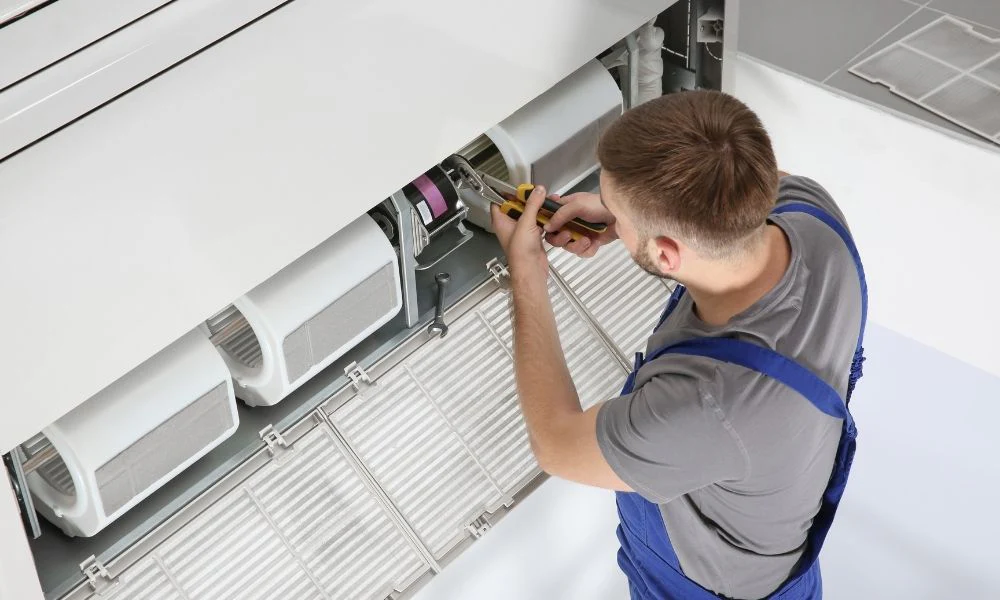
Sweltering summers in St. Louis and the Illinois Metro East Area can turn homes into ovens. When air conditioning systems begin to lag or break down, discomfort quickly sets in. That’s where a proper home cooling assessment steps in. This article explains how an in-depth evaluation of a home’s cooling setup can bring better results during air conditioning service calls.
Checking Airflow Efficiency Guides Better Repair Work
Air conditioning repair in St. Louis and the Illinois Metro East Area often begins with checking airflow, one of the most crucial steps in a proper cooling system assessment. Without steady air movement, even high-performance units struggle to operate efficiently. Evaluating airflow helps uncover hidden issues like blocked ducts, obstructions, or damaged vents that could otherwise go undetected.
When technicians in the St. Louis and the Illinois Metro East Area measure how air moves from the system to various rooms, they can identify problem spots before they escalate. Clogged vents or undersized ducts can lead to uneven temperatures and wasted energy. Restoring balanced airflow ensures every room stays cool and comfortable, even during the hottest days.
Inspecting Thermostat Calibration Helps Target Repairs
A thermostat that reads the wrong temperature can throw everything out of sync. When conducting a cooling inspection, the thermostat is carefully tested for accuracy and responsiveness. This part is often overlooked, but it plays a vital role in the system’s daily performance.
If a thermostat misreads by even a few degrees, the unit might run too often or not enough. That affects both comfort and energy usage. By adjusting the thermostat or replacing it if needed, technicians in St. Louis and the Illinois Metro East Area can fine-tune performance and improve the success of any repair.
Evaluating System Performance Prevents Unneeded Fixes
Cooling assessments examine how the whole unit functions, not just the broken parts. St. Louis and the Illinois Metro East Area technicians use tools to measure the performance of compressors, fans, and coils to identify potential problems. This kind of full-system check ensures that only the right components are adjusted or replaced. It’s easy to jump to conclusions and swap out parts that don’t need fixing. A full diagnostic avoids this by identifying the true cause of any dip in performance.
Reviewing Refrigerant Levels Improves Unit Efficiency
Refrigerant levels matter more than most realize. Too little refrigerant means the unit can’t cool the air properly, and too much can stress the system. A proper assessment in St. Louis and the Illinois Metro East Area includes checking this balance and adjusting it for maximum efficiency.
Inconsistent cooling is often tied to leaks or improper refills from past repairs. During a checkup, these are tested using safe methods that identify even the smallest leaks. By correcting the refrigerant level, the system regains its full power to condition rooms evenly and reliably.
Why Does Professional Installation Matter in the Long Run?
A professionally installed cooling system in St. Louis and the Illinois Metro East Area starts with the right settings, placement, and design. These early steps make a huge difference in how the air flows and how efficiently the unit runs. A rushed or careless install can lead to bigger issues later, even with regular upkeep.
Over time, even small installation mistakes can cause energy waste, uneven cooling, or early breakdowns. That’s why it pays to have experienced hands set things up from the start. Proper installation sets the stage for easier air conditioning repair and helps systems last longer with fewer hiccups.
Proper air conditioning repair in St. Louis and the Illinois Metro East Area begins with knowing what’s happening behind the scenes. A cooling assessment highlights the smaller details that often get missed, such as airflow balance, refrigerant levels, and thermostat settings. With this full-picture approach, homes stay cooler, energy use drops, and repair work becomes smarter and faster.
