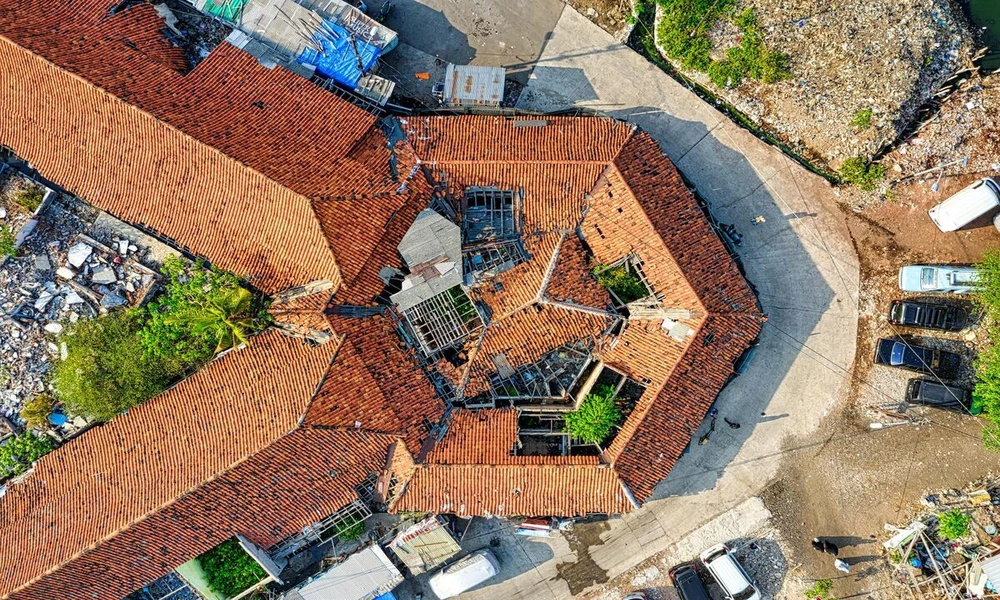
Most people in Central Florida have never really seen their own roof. They see the front edge from the driveway and maybe a gutter line from the back patio. Everything above that is a guess until something drips onto the living room carpet. For years, the only way to close that gap was a ladder and a pair of boots. Now a small camera can hover over the ridge and show the whole surface in minutes.
That change has reached local contractors too. Glory Bound Roofing Inc is a veteran-owned company that has worked on homes and commercial buildings across the region since 2002, and it lists drone work next to its shingle, tile, metal, and flat roof services. Drone work is now a normal part of many roof jobs. What matters to a homeowner is knowing what the camera can actually tell you and what it can’t.
Why Nobody Wants Boots on a Tile Roof
Florida roofs are hard to walk on, and that’s the main reason drones caught on here. Concrete and clay tile can crack under one careless step, so an inspection on foot can cause the damage it was looking for. Metal panels get hot enough by late morning to burn bare skin. Steep pitches on newer two-story homes make every trip up a safety risk. Then there are the afternoon thunderstorms that roll in nearly every summer day and force crews off the roof early.
A drone avoids all of that. It never touches the surface, it can fly above a slope that no one should stand on, and it records everything so you can look at the same image the roofer is looking at.
Four Roofs, Four Different Stories From Above
Asphalt shingles show their age in color. Spots where the protective granules have washed off look darker and flatter from above, and they’re easier to see from overhead than from the ground. Wind damage leaves lifted tabs or a faint crease across a shingle that bent upward in a gust and never sealed back down. The black streaks on so many Florida roofs usually come from algae thriving in the humidity. They look bad but are mostly cosmetic, and good footage helps separate that cosmetic staining from real wear.
Tile roofs are where aerial images help the most and where they can also mislead. Slipped tiles, cracked corners, and crumbling mortar along the hips and ridge are easy to spot. The catch is that on a tile roof, the tile isn’t what keeps the water out. The underlayment beneath it does, and that layer often wears out decades before the tile does. A roof can look perfect in photos while the felt underneath is falling apart.
Metal roofs need a closer look at small details. A drone can catch screws that have backed out as the panels expand and contract, gaps in the sealant where panels overlap, and rust starting at cut edges, especially on buildings that get salt air from the coast.
Flat roofs with TPO, PVC, EPDM, or modified bitumen tell their story through water. Low spots where water still sits a day after rain show up clearly, as do blisters and seams starting to pull apart. Drones with thermal cameras add something useful here. Flown in the evening, they can pick up areas where wet insulation under the membrane holds heat longer than the dry areas around it.
Where the Camera Goes Blind
Even very sharp footage has limits that a homeowner should understand before treating a drone report as the final word.
- A camera can’t tell whether the roof deck is soft. A person on a ladder learns that by feel, and spongy plywood under shingles is one of the clearest signs that a full replacement is coming.
- A camera can’t see underneath tiles or shingles, so the underlayment and the nailing pattern stay hidden.
- A camera can’t see inside the attic, which is often where the first evidence of a leak shows up. Stained rafters, daylight coming through nail holes, and poor ventilation are all visible only from inside.
- Flashing that is tucked behind stucco or siding, where many Florida leaks actually begin, usually needs hands-on probing.
The Paperwork Side of a Picture
Insurance is a big reason Florida homeowners care about roof condition. Older homes often need a four point inspection before a policy is written, and a wind mitigation form can lower premiums by documenting how the roof deck is attached and how the roof connects to the walls. Both require someone in the attic, so a drone can’t replace them. It can support them.
Under Florida law, insurers generally can’t refuse coverage on a roof younger than fifteen years based on its age alone. Older roofs may need an inspection showing several years of life left. Clear, dated aerial photos make that discussion much easier. They’re also very helpful after a hurricane, because a set of “before” images gives an adjuster a baseline to compare against instead of leaving you to argue from memory.
Rules the Pilot Plays By
Commercial drone flights are regulated. Anyone flying for paid work needs a remote pilot certificate under the FAA’s Part 107 rules. That includes staying under 400 feet and keeping the aircraft within sight. The Orlando area has several airports nearby, so many neighborhoods sit in controlled airspace where the pilot has to get authorization before takeoff. It’s fair to ask whether your operator is certified.
Privacy matters too. Florida restricts using drones to capture images of private property where people reasonably expect privacy. A careful pilot keeps the camera on your roof and away from the neighbor’s pool.
Making Sense of the Footage You Get Back
A useful drone report is more than a stack of nice pictures. It should include wide shots of every slope, followed by close-ups that note where each problem is, so “cracked tile” means a specific spot over the guest bedroom and not just somewhere on the roof. Ask for the original image files and not only a PDF summary, because full-resolution photos let you zoom in on details that compressed reports blur.
Timing affects quality as well. Morning light reduces glare on metal and wet surfaces, while midday heat can create shimmer in the images. A flight before hurricane season starts in June gives you a record to compare against after a storm.
A drone is a good way to start understanding your roof, but it doesn’t finish the job. The best inspections pair aerial images with someone who checks the attic, presses on the decking, and runs a hand along the flashing. Each method covers what the other can’t see.