

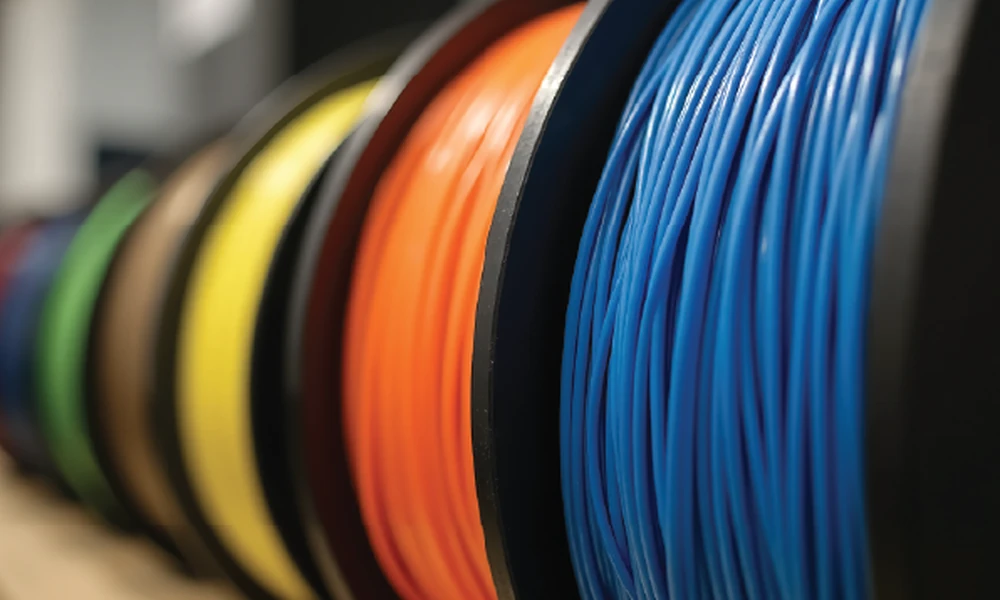
However, not only do you need a great printer, you also need to have a great print out of it. The material that you use will significantly affect the strength, look and accuracy of the model that you create. From the first layer up, using the right filament for 3D printing can make a difference in both the quality of your print and the printed object’s usability.
A lot of users who are new to this do pay attention to the printer settings. However, settings are crucial, and if the material is not of high quality, it can lead to problems during printing, including rough surfaces, weak layers, and prints that do not work. By using the best filament, your printer will have the best chance of functioning consistently and creating clean, sharp models.
Spending a few minutes to learn the material you are using before you get started with a project can save hours of troubleshooting.
Match up the filament with the project.
There are different uses for each print so it is logical to use a material that would be suitable for the task. Projects require fine detail and smooth finishes or they may require strength, flexibility, resistance to heat. Knowing these requirements can help you choose the right filament for 3D printing rather than relying on a one-size-fits-all approach.
PLA is frequently a first choice for novice because it is easy to print and yields fashionable prints. Perfect for display models, school projects and prototypes. PETG provides more durability and moisture resistance, ideal for use in functional components of repeated-use. Another commonly used material is ABS, which is good for more robust applications where heat resistance is a factor, but typically requires more controlled printing conditions.
You can also use flexible/composite and engineering materials for special projects as your skills develop.
When it comes to printing, consistency is key.
Consistency is another characteristic that distinguishes high quality filament from low quality. The filament should be uniform in diameter all along the spool which ensures smooth and even printing. This creates cleaner layers and dimensions throughout the print.
If the filament is inconsistent, it can cause issues in printing. Thickness changes can result in over-extrusion, under-extrusion, surface marks and weak sections in the model. These problems are frequently a time and material sink.
A good filament also minimizes the need for frequent adjustments when 3D printing. After locating an acceptable print temperature and print speed setting, they generally will perform well throughout various projects, creating an easier and more enjoyable printing experience.
Proper Filament Storage Helps Maintain Good Performance
Even top quality filament requires the right storage conditions! Absorption of moisture from the surrounding air is a natural characteristic of many print media. If moisture gets into the filament, it may lead to popping noises while printing, poor surface quality, stringing, and loss of strength.
Spools should be stored in sealed containers or re-useable storage bags that have desiccant to keep them dry. A cool dry storage area also helps to maintain the material for longer periods.
When starting an important print, it is important to ensure the filament is dry, as this can have a significant impact on the final product. Maintaining consistent print quality throughout the life of each spool is simple to do, with proper storage techniques.
The smaller your choices, the better your printing results will be.
Each successful print is made up of a string of good and bad decisions, and one of the most important is picking the right material. Although the technology of modern printers is advancing, they still need reliable filament to make clean, accurate and consistent parts.
Quality filament for 3D printing minimizes failed prints, enhances surface quality, strengthens bonding between layers, and ensures reliable performance in diverse applications. It also helps to make the whole printing procedure less stressful, since it eliminates common printing issues.
From prototype projects to gifting to the creation of parts to new concepts, the best way to make every project better is to invest in quality filament. Time and time again, good materials, coupled with correct printer settings and storage methods, form the basis of successful 3D printing.
